
A Republican senator on Tuesday blocked a Democratic-led resolution that criticized the use of taxpayer money for recent government-funded television advertisements featuring President Donald Trump.
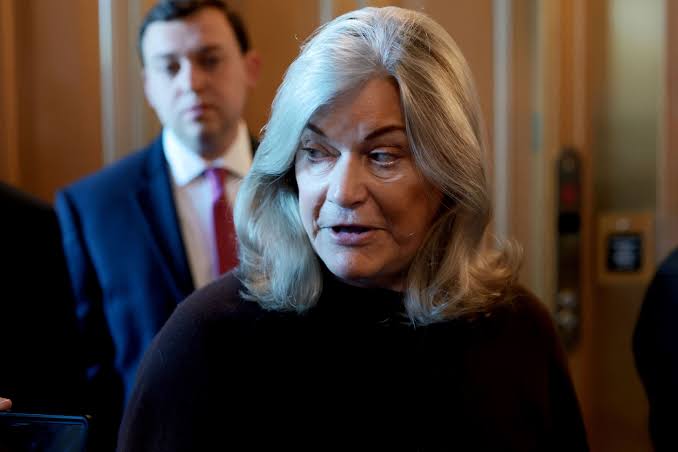
Sen. Cynthia Lummis of Wyoming objected to the resolution introduced by Democratic Sen. Maggie Hassan of New Hampshire, preventing it from passing through the Senate’s unanimous-consent procedure. Under that process, a single senator can block the measure by objecting.
The resolution said advertisements promoting Trump that aired in September and carried the disclosure “Paid for by the U.S. Government” should not have been financed with taxpayer money.
Hassan Criticizes Government-Funded Ads
Hassan argued on the Senate floor that government funds should be used for public services rather than advertisements promoting a president.
She said Trump could run advertisements using his personal or campaign resources but questioned the use of money collected from taxpayers.
The controversy centers on several television advertisements that prominently feature Trump and contain strongly political language. One recent ad shows Trump walking down a hallway while describing what he calls the “final battle” and speaking about communists, Marxists and the “deep state.”
The advertisements have attracted criticism from lawmakers in both political parties. Some Republicans have also questioned whether public money should be used to finance the spots.
Lummis Defends Her Objection
Lummis defended her decision to block Hassan’s resolution by comparing the advertisements with public service announcements used by presidents from both parties.
She argued that previous administrations had also used government-funded public messaging to communicate directly with Americans.
Lummis said the current advertisements promote American values and argued that criticism of them was connected to disagreement with the message itself. Her position was consistent with the White House's description of the spots as public service announcements rather than campaign advertisements.
The White House has maintained that the advertisements are intended to promote patriotism and communicate the administration's message, rather than directly campaign for Trump.
Some Republicans Have Also Raised Concerns
The dispute has not been limited to Democrats.
Senate Majority Leader John Thune has said he likes the message in the advertisements but does not believe taxpayers should be paying for them. Republican Sen. John Cornyn of Texas has also questioned whether the use of government money for the ads is appropriate.
The bipartisan criticism has added to scrutiny of the administration's advertising campaign.
Recent reporting has indicated that the advertisements were funded through government resources, with reporting pointing to Department of Homeland Security and Customs and Border Protection funding. The size of the broader campaign has also become a subject of debate.
Trump Defends the Advertisements
Trump has defended the advertisements and rejected the suggestion that they are campaign material.
He has argued that he is not currently running for office and therefore does not view the advertisements as political campaign ads. Trump has described the spots as messages about the country and American values.
The White House has similarly characterized them as public service announcements.
Critics, however, have pointed to the advertisements' language and Trump's prominent role in them as reasons for questioning whether they should be treated as ordinary government public-service messaging. The issue has also prompted legal and ethics concerns about the use of public funds for political messaging.
Debate Over Taxpayer Money Continues
The Senate dispute comes weeks before the 2026 US midterm elections, increasing attention on government-funded advertisements featuring the president.
The immediate resolution introduced by Hassan did not advance after Lummis objected. The disagreement now remains part of a broader debate over the appropriate use of government funds for public messaging and the distinction between government information campaigns and political advertising.
The White House continues to defend the advertisements as public service announcements, while Democratic lawmakers and some Republicans argue that taxpayer money should not be used for content that promotes the president.
The legal and political questions surrounding the advertisements could therefore continue as scrutiny of the administration's spending and messaging increases ahead of the midterm elections.


.png)
