According to reports, an NSA outage affects a crucial site for Middle East intelligence activities, forcing the agency to use workarounds.
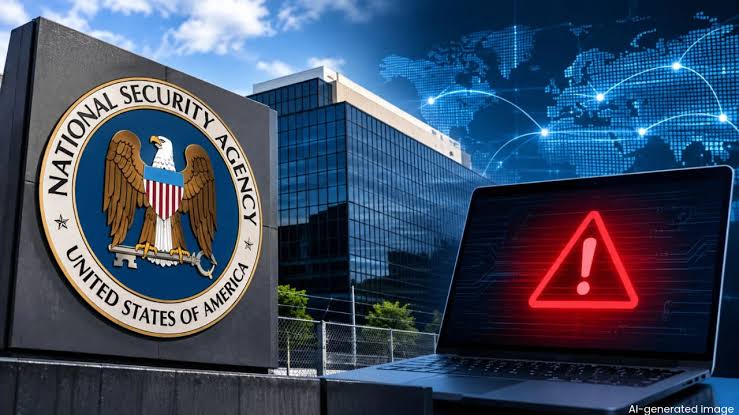
Four people familiar with the situation told CNN that the widespread IT disruptions that have kept a sizable portion of the National Security Agency's workforce at home for the past two days also affected operations at a crucial Georgia facility that supports cybersecurity and signals intelligence operations centered on the Middle East, where the US is currently at war with Iran.
The agency's most crucial and sensitive intelligence-gathering systems are still operational, according to a number of officials. The NSA has several backups and workarounds at its disposal, despite the fact that the outage has prevented staff from accessing one of its own classified communications networks. Additionally, many of the agency's computer networks escaped undisturbed because they are so old and heavily "compartmented"—locked away from access to other systems to preserve sensitive material, as one insider humorously pointed out.
However, the extent of the disruption, particularly its potential to affect internal communications pertaining to a US war zone, has highlighted the potent consequences resulting from what Trump administration officials on Wednesday described as a consequence of the widespread deployment of artificial intelligence.
Even the most potent cryptography and cybersecurity organization in the country, which is full of skilled hackers and code-breakers, is ultimately vulnerable to the negative effects of quickly developing AI technology.
Many NSA workers were still unable to resume their jobs by Wednesday. "In order to ensure continued progress of securing restoration, on Wednesday, 18 November, Maryland non-essential day shift personnel should not report for duty unless directed by their supervisor," according to an operational status update that CNN was able to access.
The agency's patching efforts to restore access were proceeding "slower than expected," according to a senior administration official.
The National Security Agency has been contacted by CNN for comment.
Using workarounds
According to current and former US officials, staff at the agency's cryptologic center in Georgia are in charge of managing cyber operations targeted at the Middle East, while NSA headquarters at Fort Meade, Maryland, is "the center of the universe" when it comes to managing the agency's internal classified communications network.
Although the breakdown prevented Georgian authorities from communicating with colleagues stationed in the area via its confidential internal communications network, NSANet, they were still able to share information using backup systems and workarounds.
In essence, NSANet is a massive infrastructure for confidential emails. According to a former senior NSA officer, a US official in a Middle Eastern capital could be momentarily unable to read a classified intelligence report shared through NSANet when it is down, but that individual would find another way to obtain the material.
Over the course of several decades, NSANet has developed into a large, costly piece of hardware and software that can be challenging to administer. According to a second former senior NSA officer who spoke to CNN, there have been other NSANet failures during system upgrades over that time, some of which were deliberate and others of which weren't.
The former official stated, "It wasn't designed, it evolved." According to the insider, the agency is virtually trapped with NSANet, flaws and all, since replacing it would be expensive and time-consuming.
Officials at other US intelligence organizations noted that their NSA connections were unavailable all day on Tuesday.
One contractor remarked, "Some parking lots [at Fort Meade] were fully abandoned on Tuesday," expressing amazement at how deserted it felt at a hub with more than 20,000 workers.
Not a cyberattack
After being briefed on this week's outage, a number of current US officials stated that it was not a hack but rather seemed to be related to the NSA's handling of software upgrades for vulnerabilities in PHP, a programming language that runs around 70% of websites worldwide. AI tools were used to find the flaws, which were revealed last month by private researchers. Organizations were encouraged to apply software patches by the NSA itself.
AI has discovered numerous new vulnerabilities, of which the PHP issues are only a few. Numerous businesses and government organizations are currently finding a number of new vulnerabilities in their systems, and they are under pressure to quickly fix them. Organizations are overburdened if they don't have a plan to do so.
Sen. Mark Warner, the Democratic vise chairman of the Senate Intelligence Committee, stated in a statement on Tuesday that "AI is making it possible to identify vulnerabilities across enormous numbers of systems at unprecedented speed, creating enormous pressure on companies and government agencies to patch those vulnerabilities immediately, often all at once, putting tremendous strain on systems that weren't built to handle that pace of change."
Memes and allusions to Jeff Goldblum's Jurassic Park statement about scientific progress are making the rounds in some NSA offices: "Your scientists were so preoccupied with whether or not they could, they didn't stop to think if they should."
The NSA is well-known for its elite hackers and codebreakers, but far less attention is paid to the labor-intensive tasks performed by IT staff to keep the enormous organization operating globally.
Senior administration representatives spent the entire Wednesday trying to clarify that neither the NSA nor any of the other private organizations that had experienced problems in the previous week had been the target of a cyberattack.
Jay Clayton, the director of national intelligence, told lawmakers on the House Homeland Security Committee on Wednesday that he has a "very high level of confidence" that none of the downed systems were the consequence of a cyberattack because each one had a unique cause and none of them displayed the digital characteristics of an attack.
Clayton stated, "They are different causes." "After that, we investigated both the public and private sectors. What methods, strategies, and practices have been employed in the past for that kind of (hacker) activity? Are any of them visible here? They are not visible to us.
Like every other company on the planet, the NSA will have to strike a balance between using AI tools and maintaining people on keyboards to maintain systems. The renowned spy agency is facing how AI capabilities are both making its job much simpler and much tougher, much like the cybersecurity sector as a whole.
A veteran military cyber operator told CNN, "There's always a balance between using cutting-edge AI tools and maintaining stability of systems, and [the NSA is] no exception to that." "Just as AI makes software development faster and more capable, it also introduces new and difficult-to-predict bugs in that software that sometimes cause analysts' tools to not function as expected."