Trump's proposal to restrict mail-in voting in the midterm elections is rejected by the Supreme Court.
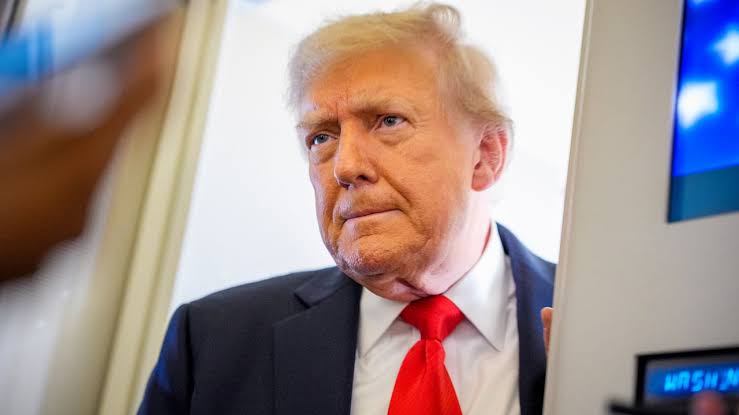
President Donald Trump's contentious plan to alter the way mail ballots are distributed to voters nationwide was rejected by the Supreme Court on Monday. Election authorities cautioned that the proposal would have had disastrous effects if it had been permitted to go into force for this year's midterms.
A majority of the justices rejected the process that would have given the US Postal Service the unprecedented authority to withhold potentially millions of mail-in ballots in one of the most important issues to arrive on the court's quick-turn docket in years. The plan might cause turmoil and widespread disenfranchisement, according to some GOP election officials.
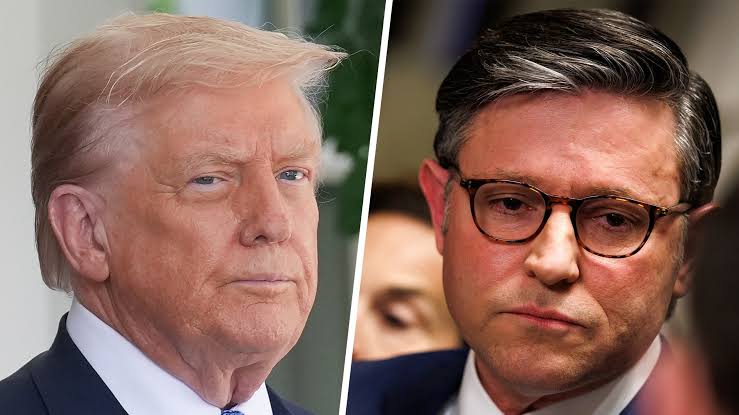
In its three-sentence, unsigned ruling, the court stated that the administration "is unlikely to succeed on the merits of its challenge," but it provided little justification. Clarence Thomas and Samuel Alito, two conservative justices, dissented.
The president, who has been criticizing mail-in voting for years with false accusations of widespread fraud while still casting his own ballot by mail, has suffered a major setback as a result of the ruling.
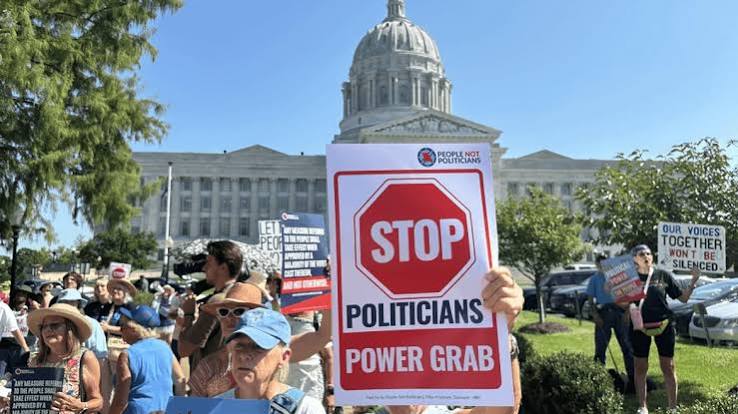
In order to guard against that purported fraud, the administration presented its proposal as a "modest" modification to postal laws. However, Trump's detractors characterized the move as an unlawful power grab that the US Postal Service wasn't even ready to execute.
The White House has been contacted by CNN for comment.
In a concurrence, conservative justice Brett Kavanaugh stated that while he believed the plan would be under the purview of the USPS, "state and local election officials do not have sufficient time to reasonably implement the rule before the elections."
That seemed to acknowledge a deluge of briefs from state and local election officials who contended that there was just not enough time to carry out the president's directive at this point in the election process. However, it also implied that the president might be able to get Kavanaugh, Alito, and Thomas to test the reforms in a subsequent election.
Alito stated in his dissent that he didn't think the states and voting rights organizations who opposed the rule would prevail because of the practical issues with its implementation brought forth by numerous election officials.
According to Alito, "the government has a compelling interest in enforcing the regulation, and adopting it will also enhance the visibility of Federal Ballot Mail" in order to better detect election fraud." Conversely, the plaintiff States point to the practical consequences of enforcing the law around the midterm elections. Although I take that issue extremely seriously, it is insufficient to persuade me to reject the application.
Alito observed, "That Hail Mary pass is unlikely to be successfully completed here." "The Postal Service has extensive power to control mail."
A bipartisan coalition of election administrators, former governors, and others cautioned the judges about last-minute modifications to postal ballot processes, in addition to the Democratic-led states and voting rights organizations that opposed the idea. States were required under the Postal Service rule to transfer large volumes of voter data to an online portal that was not yet operational. Additionally, it necessitated modifications to already-purchased ballot envelopes, which a growing number of states had started mailing.
The court's ruling late on Monday was applauded by the Democratic states and voting rights organizations that sued over the mandate.
Colorado Secretary of State Jena Griswold, a Democrat, declared, "Trump's attempt to sabotage the 2026 elections has failed."
The high court's ruling, according to Democrat California Attorney General Rob Bonta, was a "victory for our democracy and a powerful affirmation of the rule of law."
In order to protect the ballots and guaranty that only eligible voters receive them, the administration said that the modifications were necessary. However, a coalition of two dozen Democratic-led states and voting organizations have characterized the initiative as a power grab by a president who has often made bogus claims about massive mail-in ballot fraud.
The Democratic states and voting rights groups that sued over the order praised the court’s decision late Monday.
However, in this instance, the court determined that the "equitable factors," or the possible harm that voters might experience, outweighed such worries.
The high-profile emergency appeal was filed last week, marking the Trump administration's third rush to the Supreme Court over the policy. For technical reasons related to the date of the case contesting the policy, the court permitted the president to proceed in late August. Days later, a lower federal judge prevented the amendments from taking effect.
The Democratic states and voting rights groups that sued over the order praised the court’s decision late Monday.
States were compelled by the president's directive to provide the US Postal Service with lists of qualified voters. Delivering ballots mailed by states to individuals who are not on those lists would be prohibited. Additionally, it mandated that ballot envelopes be equipped with tracking barcodes. Additionally, it "prioritized" federal prosecution of state election officials who mail or receive ballots to people who are not citizens or who are not authorized to vote.
The Democratic states and voting rights groups that sued over the order praised the court’s decision late Monday.
According to the whistleblower's testimony, officials would refuse to distribute the entire batch of mailings that the envelope was part of, in addition to withholding one ballot if there was an issue with the barcode on the envelope. The whistleblower also detailed a hurried procedure to set up an internet data sharing mechanism, which they claimed might further expose the intricate strategy to possible widespread disenfranchisement.
The Democratic states and voting rights groups that sued over the order praised the court’s decision late Monday.
However, there are still very few instances of illegal voting, and the administration has never offered proof of widespread fraud large enough to affect the results of the 2020 election or any other contest.
The plan was rejected by several federal courts. Carl Nichols, a Trump nominee and US District Judge in Washington, DC, became the most recent to postpone the USPS regulation until the midterm elections over the weekend.
The Democratic states and voting rights groups that sued over the order praised the court’s decision late Monday.