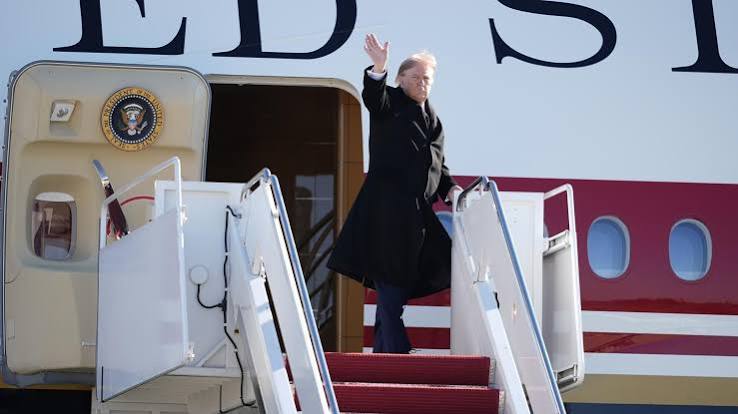
It's a tried-and-true practice for presidents to travel abroad for a worldwide pick-me-up in order to regain control and escape political despair.
Air Force One has been leaving political turmoil in its wake ever since Ronald Reagan exchanged a recession, 11% unemployment, and Democrats' 26-seat pickup for a five-day tour around Latin America in 1982.
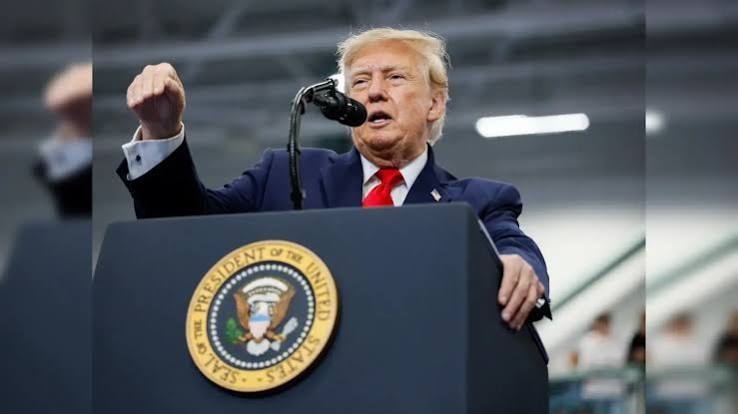
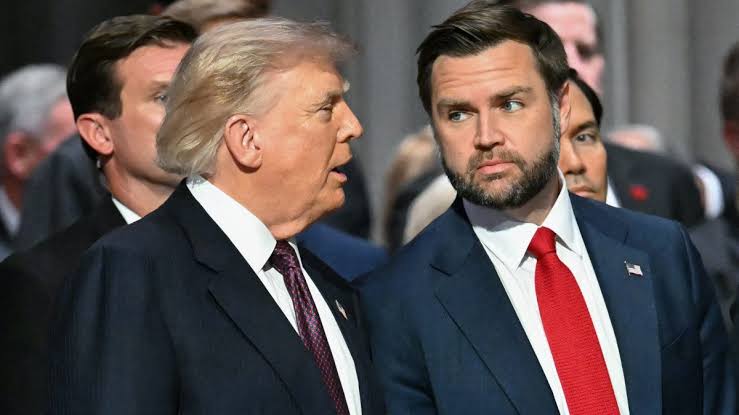
This week, President Donald Trump will try to follow suit with a long-planned trip through Asia that will include an unprecedented three-way meeting with his authoritarian counterparts from China and Russia on Thursday. This will be a spectacular display of geopolitical theater alongside men whose authority in their own countries is largely uncontested.
It could be impossible to avoid drawing comparisons with a recently limited US leader.
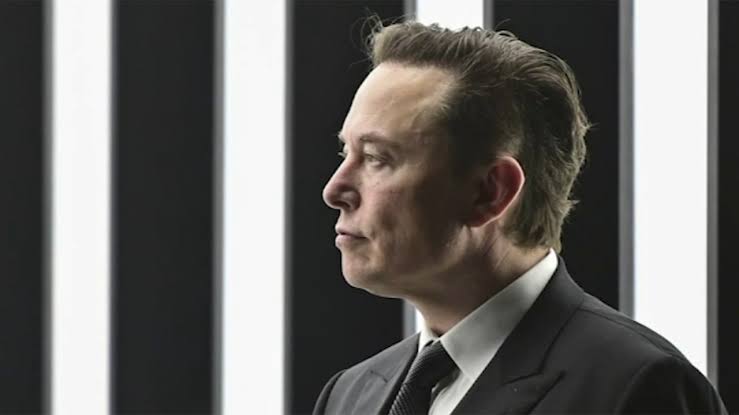
Trump's overseas colleagues instantly noted the harsh criticism he received from voters this month, keeping a tight eye out for any indications of declining political capital and early-onset lame-duck status. Elon Musk, whose $445 million in political expenditures failed to secure Republican majority, will accompany him on the trip.
Only the president has authority over foreign policy and presidential travel. Pomp and circumstance are present. Edgard Kagan, a former US ambassador to Malaysia and current senior consultant at the Center for Strategic and International Studies in Washington, stated, "There's a focus on it." "This is a method to start rewriting the story and reminding people that the president is still in office."
There are other issues that Trump must deal with. Trump's advisors maintain that the issue surrounding Jensen Huang's high-powered AI processors and his alleged liaison with a Chinese spy won't overshadow the US president's visit to Shenzhen, the glittering center of China's tech industry.
American officials have already told CNN that Trump does not plan to bring up the espionage issue with Chinese leader Xi Jinping, with whom he will meet for the fourth time in just over a year. Additionally, officials stated that they did not anticipate the two men talking about the recently resurrected internal discussion inside the government on how to further limit the export of powerful processors to China.
One senior US official stated, "It's probably not something we're going to read the Chinese in on right now."
Trump, who has never been particularly fond of arduous journeys across many time zones, leaves for the Philippines on Monday after reorganizing his West Wing leadership and encountering calls from some allies to dismiss Cabinet officials, including the secretaries of Defense and Commerce. Prior to the trip, Trump had an air travel meltdown that he did not publicly address for days, raising further concerns about his attention and psyche.
At two summits of leaders, the Asia-Pacific Economic Cooperation (APEC) in Shenzhen and the Association of Southeast Asian Nations (ASEAN) in Manila, Trump will attempt to refute the narrative of his waning influence by announcing new business agreements and reiterating American presence in a region that has endured decades of neglect from Washington.
Trump, like his most recent predecessors, has found the idea of a "pivot to Asia" to be elusive. A war in the Middle East, which prevented George W. Bush, Barack Obama, and Joe Biden from completely shifting American foreign policy toward the Pacific, hampered his second term.
Over the past year, Trump has worked to strengthen his relationship with Xi. Additionally, according to White House sources, he has been looking for additional trade agreements and intends to sign one with Thailand this week.
However, Trump's foreign policy agenda is still dominated by the Iran war and his thus far fruitless attempts to put an end to the conflict in Ukraine. His discussions this week in Asia, where fuel prices have skyrocketed as a result of the hostilities, are probably going to be affected by both.
Democrats' successes at the state level will also raise concerns about how much Trump still has to offer. Global tariffs and the war in Iran, his two main foreign policy efforts, caused price hikes that fueled voter resentment of him and Republicans. In defiance of the long-held belief that a president has more discretion over foreign affairs, Democrats have pledged to restrict his powers in both areas.
For many years, traveling abroad has served as a means of both emphasizing that point and getting away from Washington as the opposition gets ready to seize power. Reagan's image-maker Michael Deaver is credited with creating the strategy as he planned the 1982 tour to Latin America.
Since then, almost all presidents have adopted the same strategy. In November 1994, following the first Republican takeover of Congress in decades, Bill Clinton traveled to the Philippines. A few weeks after the GOP lost Congress in 2006, George W. Bush was in Vietnam. After losing the midterm, Barack Obama traveled to Asia in 2010 and 2014. Additionally, after the GOP lost its majority in the House in 2017, Trump himself made a somewhat disappointing trip to France.
Kagan remarked, "I've been with presidents right after midterms, both wins and losses, and it's always important." "It serves as a reminder to both the country and foreign observers that the president has complete control over this."
For Trump, that entails discussing global issues in a collaborative environment with influential individuals. The 1945 conference at the Crimean resort of Yalta, where Stalin, Churchill, and a very sick Franklin D. Roosevelt divided the postwar globe into western and eastern spheres of influence, is unpleasantly reminiscent of the meeting between Trump, Xi, and Russian leader Vladimir Putin, according to some.
The three-party meeting was first suggested by Putin as a forum for discussing the conflict in Ukraine, where delicate border and sovereignty problems loom over emerging peace negotiations.
Ukraine won't even be on the agenda, according to Trump's advisors, who maintain that Thursday's meeting is nothing of the sort. Rather, Trump wants to start talking about nuclear weapons with two leaders he has cultivated. With an estimated 5,000 warheads apiece, the US and Russia's most recent nuclear armaments agreement ended in February. China, on the other hand, has been steadily increasing the number of warheads in its arsenal to over 600, but it is not particularly interested in signing an agreement.
Speaking on condition of anonymity, a US official stated that there were few hopes for a significant breakthrough and that the discussions were merely a beginning.
The official stated, "It's time for China to sort of step up to the adult table, if you will, and have adult conversations about adult things."
According to officials, Xi had first shown doubts about holding the gathering because he was worried it would overshadow the APEC summit and his efforts to present China as a rising power. However, China's foreign ministry described the conference as having "groundbreaking significance" on Monday, with spokesperson Mao Ning stating that "such efforts would help stabilize the global situation."
Trump, who occasionally claims to be envious of autocrats who rule as they like, was on board right away.