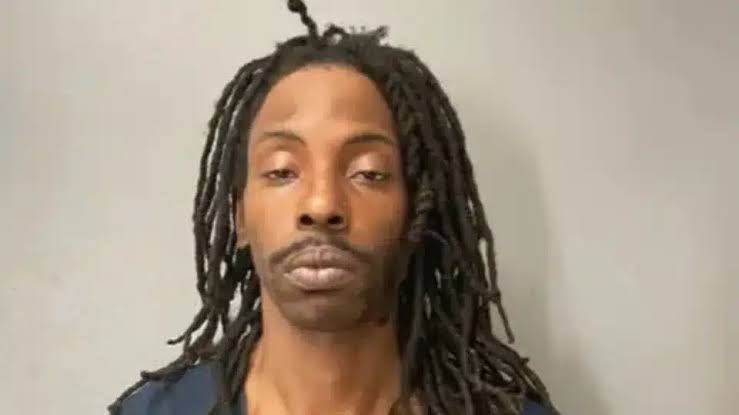
At a month-long criminal trial in Washington's federal court last month, the accusations were very simple: that one individual had allegedly stolen cars and held up seven 7-Eleven locations and a few other service stations in the spring of 2023.
However, there was a surprise in Shamell Naquan Joyner's trial. During their deliberations, the jury discovered a Chinese yuan in one of the evidence's sweatshirts. Additionally, they discovered suspicious white powder in a folded piece of paper inside a jacket that was also a part of the case. It looked like narcotics, according to the judge and prosecution.
The defense team, law enforcement involved in the case, and the DC US Attorney's Office were unaware.
In recent days, when word of what transpired during the jury deliberation went around the federal court, concerns were expressed.
Last week, a number of seasoned attorneys in Washington told CNN that they had never heard of a case as unpleasant as this one. However, some veteran DC prosecutors acknowledged that every few years, a jury may come upon material that was not sufficiently investigated by law enforcement.
The trial's presiding judge, Rudolph Contreras, was taken aback.
A few days later, the judge with ten years of experience on the bench stated in his ruling, "The Court shares Mr. Joyner's amazement at law enforcement's failure to uncover the Chinese Yuan, note, and powdery substance in the physical evidence."
The judge also mentioned Joyner's attorney, John Liolos, on the bench, saying, "Mr. Liolos, who I know is from New York, is probably astonished that any money got past the police department."
When asked how the investigators involved in the investigation were unaware of the drugs and money in the pockets, the FBI declined to respond.
A representative for the DC US Attorney's Office did not provide a direct response when asked how the evidence oversight occurred.
The charges
In the spring of 2023, Joyner was accused by prosecutors of robbing ten convenience stores and gas stations in central Washington, Maryland, and northern Virginia. They claimed that by May 2, Joyner was hitting many crimes in a single day after the initial robberies began a few days apart in April. On about two of the days that the armed robberies took place, he was also charged with armed carjackings.
In 2003, Joyner was indicted on 28 counts as a result of the occurrences. He was not accused of possessing drugs.
For the US Attorney's Office, the case was significant. The jury heard witness testimony over ten trial days during the entire month-long trial, followed by a week of deliberations. Up to nine attorneys and three prosecutors represented Joyner during the trial.
The finding
On July 22, the jury's second day of deliberations, a juror informed courthouse workers that they had discovered certain items inside a jacket and a sweatshirt that the accused robber had worn in one of the carjacked vehicles.
The unidentified juror remarked, "Some of it kind of spilled out a little bit, but (a juror) put it back in the pocket and we put it back in the bag."
In the jury room, there was a sweater that the jurors could look at as evidence. The foreperson went on to say that a juror had opened the pocket and "pulled out – it was crumpled up — it was a bill... one of the Chinese Yuan bills."
Joyner faced significant legal challenges when the jury discovered suspected drugs and cash in the pockets at the conclusion of the second day of deliberations.
Both pieces of clothing were inside the Toyota that Joyner was accused of stealing when it was apprehended by police a few days later, and they had been crucial pieces of evidence linking him to two of the thefts on May 2.
Would Joyner now face prejudice from the jurors? Had the jury's discovery of the alleged drugs supported the trial's witness testimony more than Joyner's defense attorneys had expected?
Joyner stole money during the armed robberies of four different convenience stores, according to a witness who testified, according to the Justice Department. A witness claimed that the burglar at one of the 7-Eleven stores stole his wallet, which included Chinese Yuan from a study abroad trip.
The nite Joyner allegedly held up a gas station, a cooperator who transported Joyner separately claimed that Joyner had paid him in narcotics. The armed robber had donned the jacket with what seemed to be drugs in the pocket.
Contreras led each juror individually into the courtroom following the finding in the pockets.
He informed them that the alleged narcotics and the Chinese bill were not included in the case's evidence. Each juror informed the court that they may disregard those things when evaluating Joyner's case.
They resumed their deliberations.
The decision
On Monday of the next week, which was the fifth day of deliberations, the jury was in yet another difficult situation.
They stated they were unable to reach a consensus on over half of the accusations Joyner was facing, which included one carjacking and five alleged armed robberies.
In a note to the court, they stated, "The jury remains deadlocked on or unable to vote on the remaining 15 counts in this case." "We disagree on what defines a reasonable doubt and how to establish identity beyond a reasonable doubt. We are unable to render decisions on the remaining 15 counts in the absence of more evidence or testimony.
Contreras concluded the proceedings by rendering a partial decision.
The jury's diligence in failing to reach a consensus on a number of Joyner's allegations mirrored an uncommon difficulty the US Attorney's Office has had in a number of other criminal cases this year.
Nevertheless, the jury found Joyner guilty of 13 felony charges, including four armed robberies and a carjacking in Northwest Washington and Maryland on May 2, 2023, as well as an armed robbery in downtown Washington in mid-April 2023.
According to a US Attorney's Office representative, "the jury's verdict ensures the defendant will face a 31-year mandatory minimum sentence, making the D.C. community safer with this serial robber off the streets."
Joyner's conviction has not yet been challenged by his defense lawyers. Since a final ruling in the matter is not final, they declined to comment.