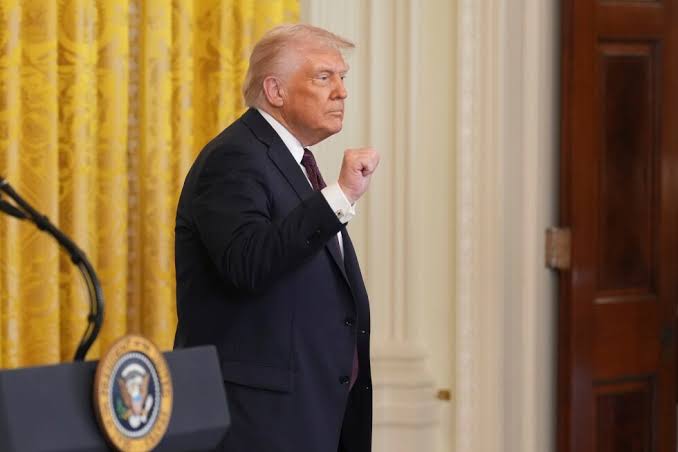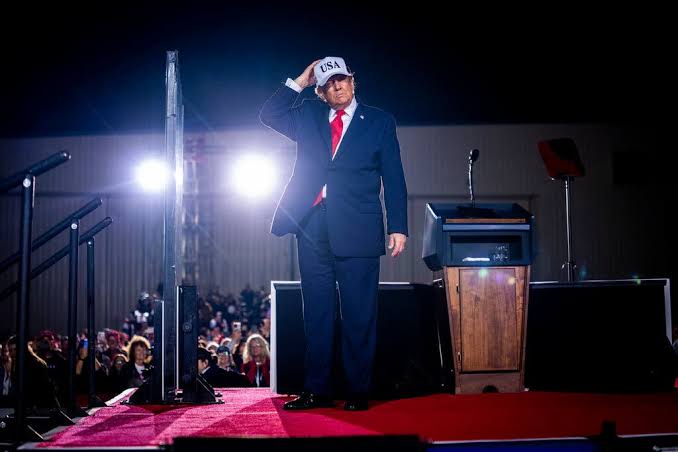
In response to the shocking defeat of President Donald Trump by voters in the midterm election, Republicans have opted for a counterintuitive solution: more Trumpism.
Days after the president appointed "America first" agitator Stephen Miller as White House chief of staff, the House GOP conference on Tuesday selected feisty Ohio Representative Jim Jordan to lead its minority next year.
And after lamenting the election fiasco, the soon-to-be-extinct Republican majority in the House came together to prevent the impeachment of Defense Secretary Pete Hegseth, the most despicable member of the president's Cabinet.
These are not the tactics of a party trying to make up for widespread losses across the country, particularly in areas that are deeply red. Instead, outgoing House Speaker Mike Johnson's decision on Monday—"The voters made the wrong choice"—seems to be motivated by the GOP's opposition.
Jordan and Miller are the most combative duo in MAGA politics, aside from Trump.
Jordan is a sharp-elbowed master of disruption who may be even more successful in opposition than in government. His rapid defenestration of witnesses has caused controversy in numerous congressional hearings. When the Democratic investigative blitz begins next year, he will be Trump's first line of defense.
Miller will make the most of his boss's final two years in office because he is the embodiment of unadulterated nationalism in Trump's constituency.
Because voters rejected many aspects of Trump's ideas, performance, and personality last week, their elevation sends a clear message that the Trump GOP will not apologize or back down.
This party isn't trying to reinvent itself. It desires conflict.
Why Trump won't alter his direction
After Trump and his crew lost the House and the Senate to Democrats and his red wall collapsed, an outsider would have anticipated more introspection from them. If the party wants to turn around its losses and have a chance to take back Congress and keep the White House in 2028, it must surely appeal to a larger audience.
However, revolutions seldom become more moderate. Additionally, Trump may suddenly be at odds with his most ardent supporters after losing the political middle ground.
On Tuesday, the House GOP unexpectedly banded together to thwart dissident GOP Rep. Thomas Massie's bid to impeach Hegseth, demonstrating his continued strong hold on his party.
Voters may find it offensive to save Hegseth's position because he is the main organizer and supporter of the Iran War, which even many Republican voters despise.
However, a week after a disastrous election nite, the vote boosted House Republicans' spirits, and Trump enthusiastically hailed it on social media.
However, this was probably a rearguard victory by an already-defeated army because to the large approaching Democratic majorities. Democratic House Minority Leader Hakeem Jeffries, who will take over as speaker in the upcoming year, stated, "This is not the end of it; it's just the beginning."
How Trump's power could paradoxically be strengthened by a smaller GOP tent
Given the magnitude of the Democrats' midterm win—they currently hold 256 seats in the House and 54 Senate seats with two undeclared—Republicans will have a very difficult time regaining control in 2028.
Therefore, it seems like a bad idea for Trump to double down on a strategy that voters already detest for two years.
However, the new Republican Party is a reflection of a president who has spent his entire life escalating the conflict—often on more severe terms—in response to every setback.
Furthermore, the Trump GOP has long since ceased paying attention to moderates, commentators, and establishment leaders when it comes to the best course of action. Following the 2012 election, the party ordered an autopsy to determine why Mitt Romney, its nominee, was unable to defeat President Barack Obama for reelection. According to the report, in order for the GOP to regain the White House, it must expand its base in order to appeal to a more varied group of young, female, and non-white voters. However, the reverse occurred: Trump entered the election with his populist, nationalist, anti-immigration juggernaut and swept to power, changing the image of the staid old GOP.
An updated version of this pivot to Trump's base can be seen in Jordan and Miller's ascent from the rubble of the 2026 election disaster.
Political physics is also reflected in Jordan's win. The most moderate Republicans in swing seats were eliminated by last week's Democratic sweep. Survivors are more conservative and pro-Trump since they come from the most red districts. A smaller GOP might be even more under the president's control.
After winning in areas long considered unattainable for their party, Democrats will encounter the reverse situation in the new Congress. Senators from conservative states like Texas, Kansas, and South Carolina will draw attention to internal divisions between progressives from liberal strongholds and centrist Democrats.
Everything is explained by an immigration showdown.
The major immigration dispute that followed Trump's apparent suggestion in a "60 Minutes" interview at a possible agreement on immigration reform with the new Democratic Congress best exemplifies the GOP base's unwillingness to moderate after a crushing electoral setback. Then, Homeland Security Secretary Markwayne Mullin proposed that such a deal might include permanent legal status for undocumented immigrants, or "Dreamers," who were brought to the US as minors.
The possibility that Trump was forsaking his most devoted fans was raised by an outburst on MAGA social media. He told CBS that harsh immigration crackdowns may have gone too far, and the majority of Americans may have rebelled against them. However, the base is unwilling to back down.
In a piece headlined "Wrong Lessons," Fox News host Laura Ingraham cautioned against "amnesty" on her broadcast on Monday. By Tuesday nite, Mullin was on her show arguing that immigration and deportation policies were unchanged.
In actuality, it was never possible for a party under Trump's control to change its direction following the election. It is prudent to leave the discussion of the GOP's possible post-Trump posture to its future leaders. Last week, Vise President JD Vance's rejection of the war and Florida Governor Ron DeSantis' warning of potential ten years of political harm were the first signs of that process.
However, the Trump, Miller, Jordan, and Hegseth series is currently preparing for its last season. This implies that Washington will have a turbulent year in 2027.