GOP officials dismiss Trump's allegations of startling new electoral threats, saying, "Got to be kidding me."
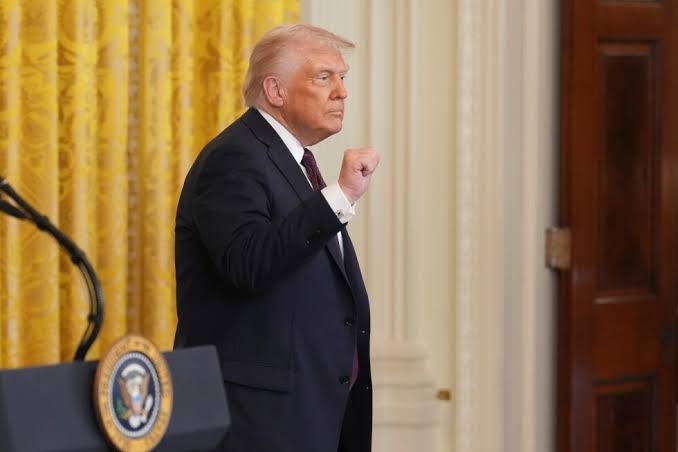
Dozens of state election officials from across the nation convened in Boston four days after President Donald Trump announced that his administration had found "shocking vulnerabilities in our election infrastructure."
Despite the fact that the midterm elections are just 15 weeks away, they did not attend an emergency summit to address the purported catastrophe.
Rather, these 37-state election officials convened for a long-planned professional conference that had a remarkably normal tone. In actuality, there was very little discussion about Trump and his primetime speech.
More than a dozen election officials from both parties told CNN in interviews that there wasn't much fresh evidence in Trump's speech. His presentation was mocked by a number of GOP leaders, who cited data supplied by the administration to support its claim that large numbers of non-citizens cast ballots in US elections.
"A lot of laughing emojis, and like, 'you got to be kidding me?' that this was all it was," according to Republican Matt Crane, the head of the Colorado County Clerks Association.
The address, which included the declassification of intelligence files that Trump said presented a "unprecedented election security nightmare" with threats from China and Venezuela, was also criticized by a Republican official from a state that Trump has won three times. (Trump failed to emphasize that the reports also demonstrated that neither nation ever tampered with the results of US elections.)
On the condition that his state remain anonymous, the official told CNN, "I read the documents." It was outdated. I've previously witnessed this. To me, it was nothing new. The majority of this information was already known to us.
Election experts and Democratic leaders have denounced Trump for, in their opinion, intensifying his long-standing attacks on the electoral process, accusing him of setting the stage to justify any possible GOP defeats in November.
While defending their records in their states, many Republicans who seek for office have been much more reserved in their public remarks, generally endorsing Trump's declared objective of cleaning up voter registers and preventing illegal voting.
However, many people criticize Trump's actions in private.
In order to avoid upsetting the Trump administration, a Republican election official told CNN under condition of anonymity, "We all know elections aren't rigged, but we have to keep our heads down and do our jobs."
Rejecting Trump's statistics
In both the president's address last Thursday and the Department of Homeland Security's subsequent presentation, a number of states that allegedly had startlingly high levels of non-citizens on the voter lists were highlighted.
The idea that thousands, if not millions, of unauthorized immigrants are casting ballots in US elections has long been promoted by Trump. Although there are isolated instances, extensive research from both left-leaning and right-wing think tanks has determined that this happens on a very small scale.
However, the administration claimed to have examined public data and found hundreds of thousands of non-citizens on the registers in Democratic-leaning states including Pennsylvania, Nevada, California, and New Jersey. More openness has been demanded by certain state leaders, who want to know how DHS arrived at those figures.
The president's most recent campaign even included certain conservative states that voluntarily gave the Trump administration access to their voter databases for review. According to the administration, states with GOP election officials had over 28,000 non-citizens on their records.
SAVE, or Systematic Alien Verification for Entitlements, the DHS citizenship database used to examine voter lists, has a history of inflating the number of registered non-citizens. States that voluntarily use the system to maintain voter rolls must look into any matches further, according to DHS.
The GOP executive director of the North Carolina State Board of Elections, Sam Hayes, who has vigorously supported a number of Trump's election policies, stated that his staff will not endorse the administration's conclusions. He stated that the state would carry out its own verification, which takes time and necessitates contacting registrants, notwithstanding DHS's claim that the state has 1,599 non-citizens on its lists.
Hayes said CNN, "There's nothing we accept at face value and just start removing folks" from the voter lists. "We still need to do the due diligence on our end. We have to make our own independent assessment of this."
"It's going to be tough to get it done by the midterms, but we're working toward that goal," Hayes said, dismissing Trump's need for prompt responses.
Election officials in Georgia told CNN that the administration's allegations regarding non-citizens on their records seem exaggerated. Only roughly 20 of the 2,549 registrants that DHS had highlighted had ever cast a ballot in the state.
Both party officials emphasized that they took their responsibility to keep non-citizens off the rolls seriously, even as they questioned the White House data.
The governor of New Jersey revealed on Tuesday that 400 people cast incorrect ballots in recent elections and that around 6,600 non-citizens were unintentionally added to the state Motor Vehicle Commission's voter records due to a technological glitch.
The unexpected disclosure from a Democratic governor in a liberal bastion caused a stir right away, and the Trump administration responded with "told-you-so" accusations.
Ignoring Mullin's threats
Homeland Security Secretary Markwayne Mullin threatened fines and possibly even "prison time" for election officials who disobey the Trump administration's demands for voter lists and other election overhauls during a follow-up press conference on Friday.
Election officials told CNN that they take these threats seriously, particularly in light of the Justice Department's indictment of a number of Trump's political rivals. However, officials stated that their attention is on their task at the same time.
The Republican head of Colorado's bipartisan election clerks' group, Crane, stated, "There is the worry about, 'Could I be made the example of?'" "But at this point, I believe it has mostly turned into white noise."
On condition of anonymity, a Democratic election administrator from a battleground state told CNN that after hearing Mullin's remarks regarding potentially prosecuting election officials, his mother called him with alarm.
All 50 states received similar warning letters from the Justice Department earlier this month. Among others who resisted were the Republican attorney general of Idaho, who chastised the DOJ in a scathing reply letter, stating that the "insinuations of criminal violations of the federal election laws are not well taken."
James Craig, a senior attorney in the Idaho attorney general's office, responded, "Stop threatening your friends in Idaho."
Because of the uncertainty of the Trump administration, even some authorities in red areas don't feel comfortable, a GOP election official from another state told CNN.
The official stated, "We have no idea what they're going to do, and it's extremely concerning when they talk like that."