Judge queries whether Trump wants to "bedazzle the city" by building a triumphal arch in Washington, DC.
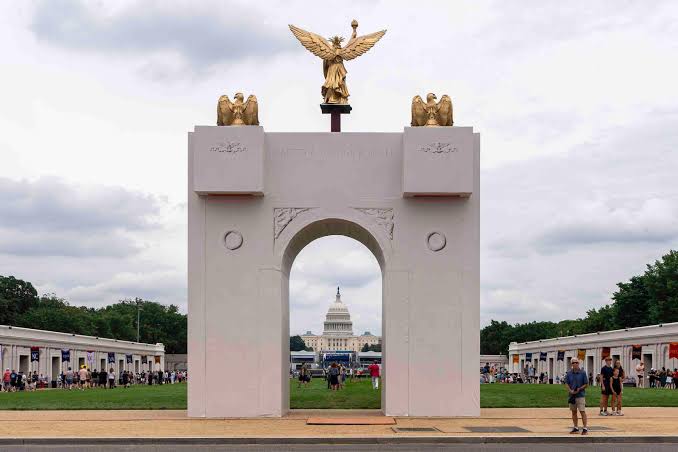
The Trump administration's rush to start building a contentious 250-foot triumphal arch, which the president wants to start next week, was questioned by a federal judge on Friday.
"What's the harm to the government to wait three or four months?" Judge Tanya Chutkan questioned an administration lawyer. "What's the rush to put this arch up?" inquiring as to if the president's primary goal is to "bedazzle the city."
The Trump administration now contends that the arch in a traffic circle, which was once suggested as a monument for the nation's 250th birthday, will function as both a tourist destination and a military facility to house drones and weapons.
Although Trump has been promoting these military justification arguments on social media for months, Chutkan pointed out that the "government had appeared to back away from that position" in their litigation. After the Supreme Court ruled in favor of the White House ballroom in August on similar reasons, the Obama nominee hinted that the Justice Department was "coincidentally" incorporating national security issues in their argument.
"How specifically does the administration intend to use this for national security? We're not talking about plans for a café.Robert Stander, an attorney for the Justice Department, was pressed by Chutkan.
Stander responded by bringing up the several attempts on Trump's life, to which Chutkan retorted, "The arch is somehow expected to dissuade assassination attempts on the president? In three years, it will be finished.
She also voiced reservations over the placement of military hardware in a location that the DOJ claims will draw up to 22,000 daily civilian visitors.
Since the designs won't be completed until the National Capitol Planning Commission meeting next week, the Justice Department contended that the challengers lacked standing. The administration had earlier stated that, with approval, building might start that same day. Chutkan noted that if this reasoning were applied, plaintiffs would have just one day to file a complaint.
"When bulldozers start digging up the ground, what would be final agency action?" she questioned.
The group of veterans suing the administration said that the construction of the arch will compromise the sanctity of burial sites at Arlington National Cemetery and asked for an emergency court order to stop it right away. The row of national landmarks from the Lincoln Memorial to Arlington National Cemetery would not be able to see the planned arch. On Friday, a number of the veterans testified in court.
Chutkan informed the plaintiffs that she was more concerned about how the impending arch will affect their individual experiences than with any "distaste and disgust against the administration."
Additionally, she seemed to support the claim that because the veterans are active participants at Arlington National Cemetery and the arch building had not yet started, they had more to lose than the plaintiff in the ballroom case who had raised esthetic concerns.
"Why isn't this case more like the golf course case when the area is still immaculate and the view is unobstructed?" Chutkan inquired.
A Virginia county board has filed another lawsuit against Trump's arch, so Chutkan's decision in the future won't put an end to the project's legal issues.