DOJ's request to postpone certification of the Alaska Senate race is rejected by the judge.
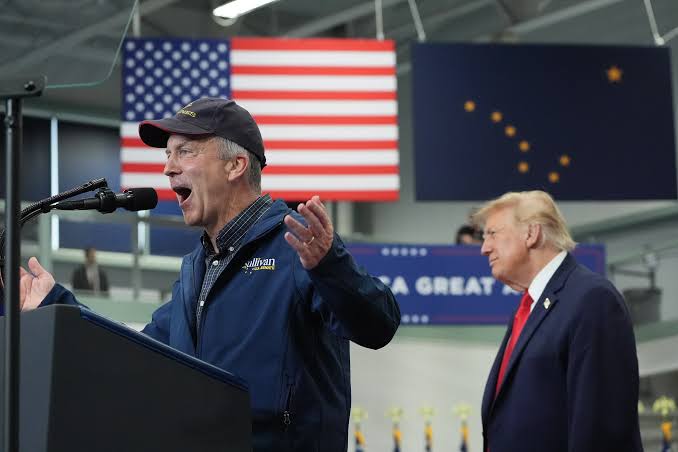
The Justice Department's petition to separate votes and postpone certification of Alaska's Senate contest was dismissed by a federal judge on Sunday. This is the most recent legal setback to the Trump administration's several attempts to influence the 2026 midterm elections.
Voters' right to cast a secret ballot would be violated, according to US District Judge Sharon Gleason, who stated that the federal government lacks the authority to compel Alaska to separate votes. In any case, she continued, it is too late for the courts to impose such a significant modification on election eve.
In its lawsuit, the Trump administration claimed that if Sen. Dan S. Sullivan lost, the existence of a spoiler candidate who shared the same name as the GOP incumbent justified a court-ordered investigation into the outcome.
"The United States provides no workable plan as to how it proposes to segregate ballots cast for Daniel J. Sullivan on Election Day and then conduct a court-ordered unspecified 'investigation' of those ballots in a manner that would preserve voter secrecy," wrote Gleason, a former President Barack Obama nominee.
The decision represents the Trump administration's most recent legal defeat in its attempts to meddle in state elections during the last few days of the midterm elections. A Justice Department request that California election authorities cast aside ballots from 20,000 individuals the agency believes may not be citizens was denied by a federal appeals court on Friday.
After the district court's decision, the Justice Department promptly filed a notice of appeal on Sunday.
A Justice Department representative stated, "Alaskan voters deserve a fair election, not to be misled in an attempt to rig outcomes."
Speaking to reporters on the tarmac outside the Air Force, Trump said he was unaware of the decision. He called the DOJ's case "one of the most meritful things" and a "very important lawsuit" after arriving in Iowa on Sunday for a campaign rally.
The Trump administration's efforts to investigate potential voter fraud and the DOJ's threats to local election officials that they would be prosecuted for noncitizen voting have also been restricted by the courts. A broad emergency order prohibiting the Justice Department and the Department of Homeland Security from requiring election officials in any state to separate ballots, remove voters from voter lists, or stop ballot processing was issued late on Friday by a federal judge.
The Trump administration cannot "threaten, intimidate, or coerce" election workers to demand modifications in ballot processing methods based on allegations that voters are ineligible, according to US District Judge Trina Thompson, who was appointed by President Joe Biden. The decision has been challenged by the Justice Department.
New accusations in the Senate contest in Alaska
This week, a New York Times article revealed fresh information concerning Democratic involvement in getting Daniel J. Sullivan on the ballot in an Alaskan Senate contest that might decide which party controls the Senate. Mary Peltola, a Democrat, is attempting to oust Sullivan.
As the legal action progressed, the state's Republican governor launched an investigation and hinted that he may object to certification based on the findings. The Justice Department also expedited its criminal investigation into the purported Democratic activities.
The administration had no legal right to involve a federal court in a dispute over Daniel J. Sullivan's candidacy that had been resolved through state court litigation several months prior, according to Alaska officials, Democratic organizations, and nonpartisan voter advocacy groups that opposed the DOJ lawsuit.
They contended that there was no proof provided by the DOJ that voters were perplexed by his inclusion, especially when election officials used multiple IDs on the ballot to set him apart from Sen. Sullivan.
Gleason stated in her ruling on Sunday that voters would actually be confused if Alaska separated Daniel J. Sullivan ballots as the Justice Department requested, despite the Justice Department's claim in its case that the appearance of two Sullivans could confuse voters.
Gleason said, "It is obvious that voter confusion and consequent incentive to stay away from the polls would result if this Court were to order that certain ballots be segregated and subject to a future and as yet unspecified investigation by law enforcement." "We strongly oppose such late-breaking changes to the election rules."