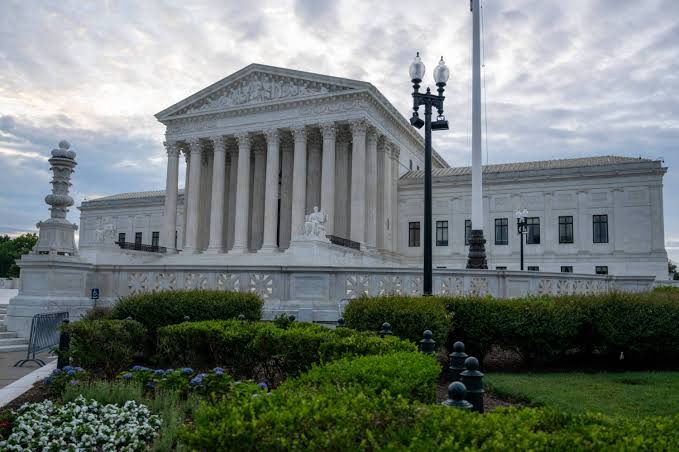
The US Supreme Court has temporarily allowed the Trump administration to restart a controversial policy that sends migrants to countries other than their own, even when they have no prior connection to those destinations.
In an unsigned order issued on Tuesday, September 29, the court put on hold a lower-court ruling that had restricted the policy. At the same time, the justices agreed to hear the broader legal challenge in December. A final ruling is expected later in the court's term.
The decision means the administration can continue third-country deportations while the Supreme Court considers whether the policy complies with US immigration law and protections against persecution and torture.
What Is the Third-Country Deportation Policy?
The policy allows the US government to deport migrants to countries that are not their countries of citizenship. The administration has argued that the measure is necessary when a migrant's home country refuses to accept them or when logistical and diplomatic difficulties prevent a direct removal.
Since the policy was introduced, more than 25,000 migrants have reportedly been sent to third countries. Destinations have included countries in Africa, Latin America and elsewhere.
The policy has faced legal challenges because migrants may have limited notice about where they are being sent and, under the administration's approach, may not receive a meaningful opportunity to raise concerns about persecution or torture before removal.
Supreme Court Will Hear the Case in December
Tuesday's order does not represent a final ruling that the third-country deportation policy is lawful. Instead, it allows the policy to operate while the court considers the underlying legal dispute.
The justices identified several questions for the December arguments. These include whether the lower court had authority to consider the case, whether it could issue relief affecting the entire group of migrants covered by the lawsuit and whether the administration's policy itself is lawful.
The court's order did not provide an explanation for its decision. Justices Sonia Sotomayor, Elena Kagan and Ketanji Brown Jackson indicated that they would have rejected the administration's request, but they did not issue separate written dissents.
Why Did Lower Courts Block the Policy?
The dispute centers partly on the rights of migrants who could face persecution or torture in a third country.
A lower court had ruled that migrants must receive meaningful notice and an opportunity to raise a claim that they could face serious harm if sent to the proposed destination. The First US Circuit Court of Appeals largely upheld that position.
The legal challenge relies in part on protections under the Convention Against Torture and US laws governing removal. Those rules generally restrict the government from sending someone to a country where they are likely to face torture.
The Trump administration has argued that diplomatic assurances from destination countries that deportees will not be tortured should be sufficient in many cases.
Administration Says Policy Is Necessary
The administration has defended third-country removals as an important immigration enforcement tool. Officials have argued that the policy is particularly necessary when countries of origin refuse to take back their nationals.
The Justice Department also argued that lower-court restrictions had created logistical difficulties and disrupted removal operations. According to the administration, requiring additional procedures could complicate negotiations with countries that agree to accept migrants from the United States.
The administration has also characterized the policy as a measure used against people who cannot otherwise be removed from the country.
Migrant Advocates Raise Human Rights Concerns
Lawyers representing migrants have taken a different position. They argue that allowing deportations without adequate notice or an opportunity to raise concerns can expose people to serious risks in countries where they have no connections.
Court filings have also raised concerns about the possibility of migrants being transferred again by the third country, potentially resulting in their eventual return to a country where they had previously been protected from removal.
The policy has already drawn international criticism. UN human rights experts recently raised concerns about the potential for torture, mistreatment and other abuses involving people deported under the program.
What Happens Next?
For now, the Trump administration can resume third-country deportations while the Supreme Court prepares to hear the case.
The December arguments will move the dispute beyond the emergency stage and toward a full consideration of the policy's legality. The justices are expected to examine both procedural questions involving the lower courts and the central question of whether the administration can carry out third-country removals in the manner it has adopted.
Until the Supreme Court issues its final ruling, Tuesday's decision only determines what can happen while the legal challenge continues. It does not settle whether the third-country deportation policy will ultimately remain in place.