As Todd Blanche moves closer to confirmation, Justice Department probes will be revitalized.
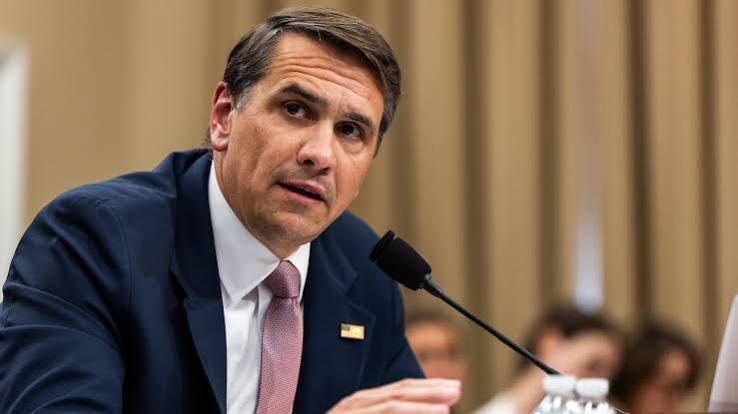
After weeks of opposition from Republicans who demanded guarantees that he would take action to correct one of the department's most contentious errors, Todd Blanche's nominee for attorney general passed a crucial test on Tuesday, passing the Senate Judiciary Committee vote.
Now, he must get the support of almost every Republican on the Senate floor in order to be considered for the position.
Since taking over temporarily in April, Blanche, President Donald Trump's former personal attorney, has actively promoted the president's agenda. The acting attorney general was aware that he needed to promptly demonstrate to the White House that he could provide outcomes in matters that the president desired to be given priority, especially in investigations related to his political objectives and perceived adversaries.
He has accelerated investigations into the government's response to alleged Russian meddling in the 2016 presidential election, pursued criminal charges against individuals and groups the president has criticized, and initiated—then abandoned—a nearly $1.8 billion plan to compensate those who feel they were unfairly singled out by the criminal justice system.
However, since his official nomination, the attorney general's office has been largely silent about contentious political matters. According to sources, this pause may pave the way for a fresh effort after the Senate confirms Blanche.
During his confirmation process, there has been less obvious activity in certain investigations that have not yet led to charges, such as the extensive inquiry into Trump and Russia. However, public activity is anticipated to resume, according to those with knowledge of ongoing investigations.
Meanwhile, other divisions of the Justice Department have persisted in pursuing issues that are seen as crucial to the administration, such as immigration enforcement and major fraud prosecutions.
Additionally, Blanche's squad is starting to face new challenges, especially those pertaining to the impending midterm elections. The Justice Department, which has so far escaped the test, will have to deal with the president's long-standing allegations of rampant voter fraud.
Securing the vote
After former attorney general Pam Bondi mishandled the Epstein files and set off a political tempest that still plagues Trump and the Justice Department, Blanche was forced into the position. After months of talking about Bondi's inability to prosecute his political and personal opponents, Trump finally fired her.
However, he created the last obstacles to his nomination. In response to an IRS contractor leaking Trump's tax information, Blanche handled an extraordinary settlement between Trump and his own government.
A large portion of the controversy was on a nearly $1.8 billion so-called "anti-weaponization fund" that was supposed to help Trump supporters, including possibly the Capitol rioters on January 6. Long ago, Blanche acknowledged that the fund was a mistake and that it would not move on. Under interrogation by Texas Senator John Cornyn during his confirmation hearing, Blanche admitted that an amendment that protected Trump and his family from IRS audits and potentially other investigations for unknown subjects was still in effect.
Blanche had to earn the support of North Carolina Senator Thom Tillis, who is not running for reelection, in addition to Cornyn, who lost his race in May.
As Tillis and Cornyn openly blamed one of Trump's political advisors of undermining White House approval for a possible compromise, the topic grew so divisive that Republicans were forced to postpone the committee vote out of concern that Blanche would not have enough support.
For several days, Blanche's team and Cornyn's main legal counsel engaged in acrimonious talks, going back and forth multiple times to develop precise language that Blanche could use to verify that the arrangement was, in fact, dead. Blanche declared a settlement last Sunday night.
In a post on X, Blanche released two documents: an unsigned declaration outlining the conditions of the IRS safeguards and a signed memo declaring that the Justice Department was formally revoking the order that created the anti-weaponization fund. Cornyn and Tillis promptly confirmed that they approved of the agreement.
On Tuesday, Cornyn expressed gratitude to Blanche for collaborating with his employees on the directives and stated that he anticipates the department would "live up" to their agreement in any future situations.
"Instead of continuing to serve in an acting capacity, Mr. Blanche deserves the opportunity to provide the stabilizing force that the Department of Justice needs," Cornyn stated.
Tillis stated that he was "going to support Mr. Blanche's nomination, but what I hope I see out of him is a bending of the curve of this absurdity."
Blanche needed the support of every Republican on the Judiciary Committee in order to move forward with a final vote on his confirmation, thus their votes were crucial.
At the beginning of Tuesday's session, Senate Judiciary Chair Chuck Grassley stated, "It's just a crime that it took so long to work out with such a common sense thing that's pretty simple."
Additionally, Tillis had reprimanded Blanche for the mishandled disclosure of the Epstein files, which at first contained pictures or private information about the victims. Despite admitting that "mistakes were made" during the process, Blanche defended the endeavor during his confirmation hearing.
In mid-July, Tillis declared that he would not support Blanche if the interim attorney general did not grant the Epstein survivors' repeated requests to meet. That meeting was scheduled for the same day by Blanche's staff.
Blanche "is the first Attorney General who has even offered to meet with the victims," Tillis wrote on social media after it was over. The statement was swiftly changed in the post to read, "I commend Todd Blanche for doing what all his predecessors over the last two decades never did."
Additionally, Blanche has collaborated with senators outside of the committee, most notably Alaska Republican Lisa Murkowski. Earlier this month, Blanche traveled to the state for two days and spoke with tribal and local leaders.
In addition to dropping two Biden-era lawsuits regarding the state's oil and gas production, the department reached a $180 million settlement with Anchorage over unfinished work on the port of Alaska, dropped a $400 million settlement with an organization that offers healthcare services to American Indians and Alaska Natives, and granted $6.1 million in grants to local law enforcement, tribal governments, and nonprofits to fight crime.