Prior to his trip to China, the Trump administration tightens restrictions on the flow of AI chips.
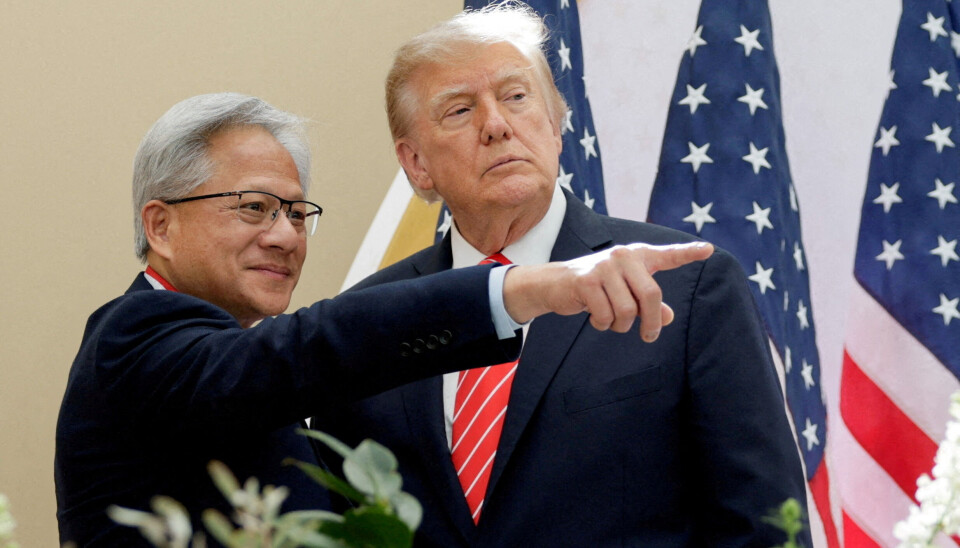
In the midst of a disagreement inside the Trump administration over how to address the matter, the Commerce Department on Monday strengthened export restrictions intended to keep China from obtaining sensitive, AI-powered computer chips.
The highly anticipated Commerce rule imposes additional restrictions on US exports to data centers that supply "significant volumes" of computing to businesses located in nations like China, Iran, and Russia that are subject to US arms embargoes.
The action follows a crisis involving the massive chip manufacturer Nvidia and its now-former CEO Jensen Huang, who has fought for the ability to sell Nvidia chips outside, and as President Donald Trump gets ready to meet with Chinese leader Xi Jinping this week.
Following reports of extramarital affairs, including one with a Chinese employee of the Singapore-based data center company Megaspeed, Huang quit last week. As part of a larger investigation into a network of international businesses accused of transferring Nvidia chips to China, the Commerce and Justice Departments started looking into Megaspeed, a significant buyer of Nvidia processors, in 2024, according to CNN.
The Commerce Department's role in controlling the sale of vital American technologies overseas has come under increased public attention as a result of the Nvidia scandal. In a Situation Room meeting earlier this month, Treasury Secretary Scott Bessent questioned Commerce Secretary Howard Lutnick about his department's unwillingness to classify Nvidia customer Megaspeed as a potential national security concern.
A Joe Biden-era export control rule that the Trump administration allowed to expire last year is likewise replaced by the new regulation. The Biden idea was viewed by Trump administration as a hindrance to American companies.
According to sources, Bessent, Secretary of State Marco Rubio, and US Trade Representative Jamieson Greer were among the senior Trump administration officials who pushed for the new regulation, while the Commerce Department had long opposed its implementation.
Because Commerce has the enforcement tools, that dynamic may become important in the future. The rule itself seems powerful, according to experts, but how it is implemented will determine whether or not it has teeth.
According to Chris McGuire, a senior scholar at the Council on Foreign Relations, the rule represents "the first good-faith effort to actually close loopholes in export controls in a year and a half."
According to a senior administration official, administration officials are also preparing for a Chinese reaction because the Commerce Department announcement coincides with Trump's planned trip to China. However, some anticipate that any reaction will follow Trump's visit, mostly because China wishes to prevent a high level of tension during the meeting, according to the official.
Beijing "will take necessary measures to resolutely safeguard its legitimate rights and interests," a Chinese foreign ministry official stated at a press conference on Tuesday.
The additional limitations, according to spokesperson Guo Jiakun, are "a typical case of economic coercion and long-arm jurisdiction." It contradicts the agreement that both parties came to.
The rule was "written by and at the direction of the Department of Treasury and the National Security Council," according to the Commerce Department.
However, as he departed the White House on Monday to travel to Asia, Trump played down reports that his administration was at odds over the issue and stated that he had no intention of firing Lutnick, who some officials have claimed ought to have done more to restrict the sale of cutting-edge chips to China.
Bessent and Lutnick "have two different views" about how quickly Commerce should have moved, Trump admitted.
Regarding the two Cabinet secretaries, Trump declared, "They're fine." "One wants to have a blow-up with China, and the other wants to be friendly."
Trump, for his part, defended the choice to postpone designating Megaspeed as a threat to national security.
Trump told CNN's Alayna Treene, "Well, he might have delayed it, but he was doing that because you could have, if you didn't delay it, if you did something, you could have a blow-up with China."
"I understand all sides of the issue, and we currently have a very excellent relationship with China. And I'll decide, but I fully comprehend all perspectives," he continued.
Trump also gave Huang a vote of confidence on Monday, stating that he "would not mind" if the former CEO of Nvidia were to return to his position at the chip manufacturing company.
Trump said to reporters, "I would not mind that." "I believe he learnt a significant lesson, perhaps one more significant than the other. However, I wouldn't mind seeing that at all.
The president's backing coincided with allegations that Huang, only days after quitting due to pressure over extramarital affairs, including one with a woman suspected of having connections to Chinese intelligence, was considering making a comeback. (A knowledgeable source stated that Huang's return is not being considered by Nvidia's board.)
Despite long-standing national security concerns about Huang held by some top officials in his administration, Trump has frequently lauded Huang, calling him a "legend" in the hours before his resignation.