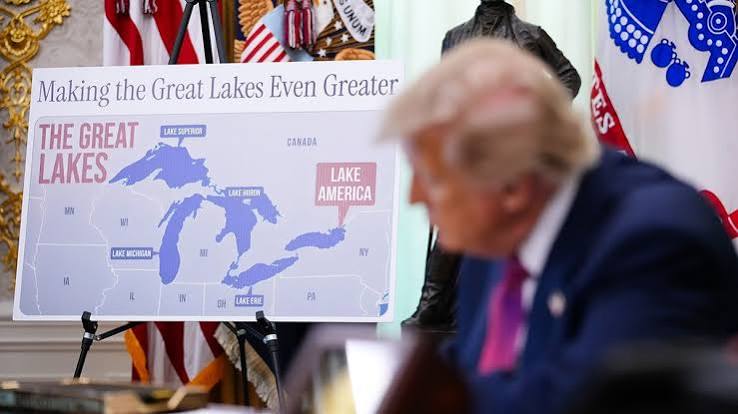
Opposition to AI data centers may be a genuine popular issue created for this particular moment. State legislators and candidates from both parties are increasingly portraying themselves as opponents of the expansion of data centers.
Additionally, recent main results indicate that it's a rather serious problem.
However, President Donald Trump and his administration officials are bear-hugging data centers, which is a significant exception to the growing political stampede away from them.
Given the increasing number of surveys demonstrating how much Americans detest data centers and overwhelmingly don't appear to want them in their neighborhoods, this is just the president's most recent political blunder.
In recent weeks, Trump's defenses of data centers have significantly increased. He has presented them as both beneficial to the US communities that embrace them and essential to competing with China in artificial intelligence.
Data centers are Trump's favorite.
The administration launched the Ratepayer Protection Pledge campaign back in March with the goal of persuading developers to voluntarily pledge that the development of data centers would not increase consumers' energy costs.
However, Trump minimized the necessity of his unilateral action even at the time. He claimed that data centers weren't actually driving up energy costs in the first place.
Trump stated, "They need some PR help because people think that if a data center goes in there, electricity prices are going to go up."
He harshly chastised Democratic New York Governor Kathy Hochul last month for issuing an administrative order that stopped new data center construction. On social media, Trump referred to them as "Cash Cows, with Lower Taxes and Record Setting Jobs" and "big, strong, bold, and Money Machines."
He told Fox News last week that "any community that turns down AI is making a big mistake," asserting that data centers would lower taxes and increase property values.
He described it as "a tremendous thing" and appeared to be amazed that anyone could disagree with them.
The president remarked, "It seems like there's a campaign against, you know, data centers."
Later that week, in an interview with Punchbowl News, he criticized the GOP-controlled state of Texas for enacting stricter regulations on the construction of data centers.
Data centers might be "bigger than oil," according to Trump.
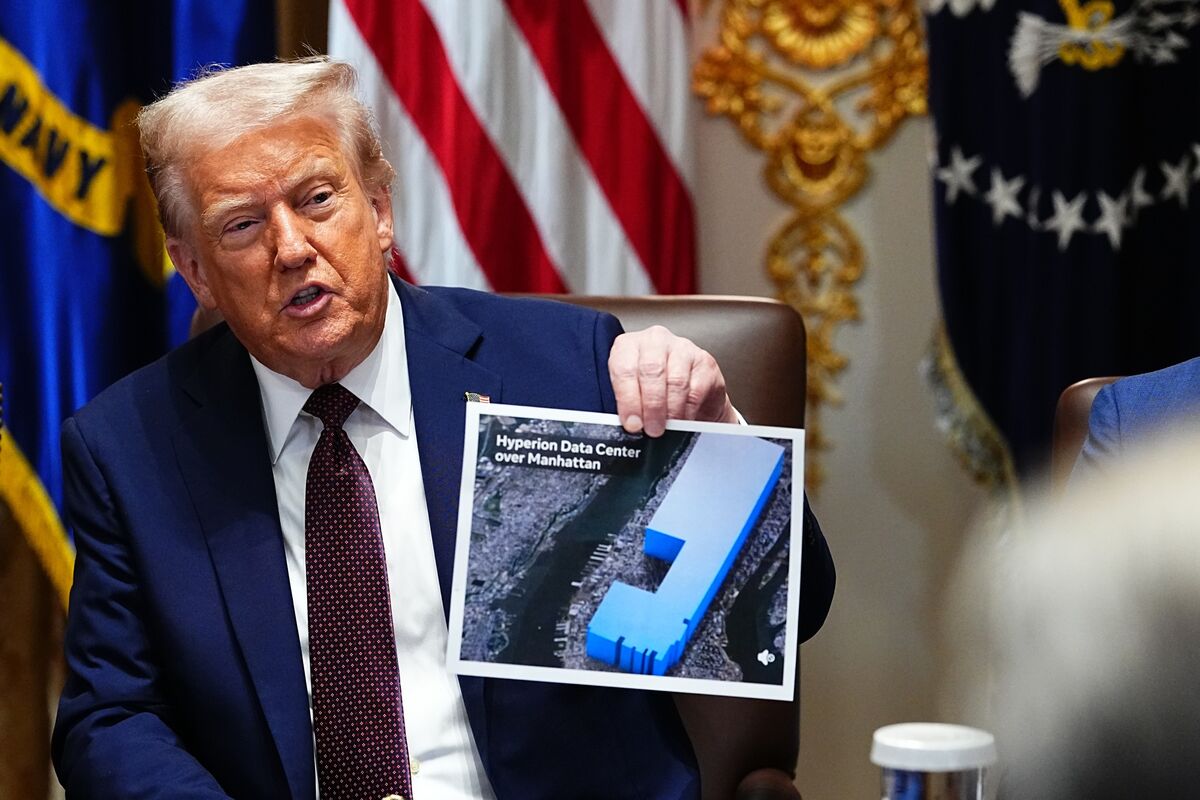
"I don't think they're ugly," he continued. "I mean, some of these data centers are the most amazing structures I've ever seen. They travel two and a half to three miles.
However, Americans genuinely dislike them.
Almost all of Trump's statements contradict the views of the American people.
According to a June Reuters-Ipsos poll, 45% of Americans opposed building new data centers.
And when it came to constructing them in their communities, the margins widened considerably. When the data centers were within ten miles of the individual's house, the margin against increased to 59%–10%. According to a March Gallup poll, seven out of ten Americans were against the construction of data centers "in your area."
It's obvious that the critics are passionate.
In the aforementioned surveys, just 3% to 7% of respondents strongly favored the establishment of data centers in their communities, while 44% to 48% strongly opposed them.
According to a Reuters study, 61% of Americans believed that data centers were essential, but 77% preferred that they be constructed far from populated areas.
Just 50% of Americans believe that data centers boost the economy and create jobs, despite Trump's assertions that they are "bigger than oil" and a source of economic benefits. And only one in six strongly agree, stating that data centers are "very" or "extremely" well described.
In a Reuters/Ipsos poll conducted earlier in June, 77% of respondents thought that data centers were driving up the cost of electricity, and two-thirds of respondents in a Pew Research Center survey conducted in March agreed, despite Trump's assertion that they are not or would not do so.
Finally, a Marquette Law School survey conducted in May found that Americans believed the costs of data centers surpassed the advantages by a staggering 71%-29% margin.
Most interestingly, it appears to be a very nonpartisan aversion based on all of these polls. Republicans are vehemently opposed to data centers, but they are also somewhat more likely to recognize their advantages and welcome them in their towns.
The initiatives to control data centers and the bipartisan campaigns against them
The way the matter has been handled nationwide, not only in New York and Texas, has demonstrated this bipartisanship. Fifteen states, ranging from deep red to deep blue, have proposed legislation prohibiting the development of data centers.
Additionally, the topic was a major factor in last week's Kansas gubernatorial primaries for both parties, which were won by opponents. (State Senator Cindy Holscher, the Democrat who won, vehemently supported a ban and renounced a prior vote in favor of data center building.) Ohio's gubernatorial candidates from both parties support a moratorium as well.
In order to win last week's Michigan primary, Democratic Senate candidate Abdul El-Sayed and House candidate William Lawrence emphasized the topic. Francesca Hong, a Democratic candidate for governor of Wisconsin, is expected to follow suit on Tuesday after using the topic as a point of contention.
Because it directly affects Americans in their towns and, they fear, is escalating their already rising expenses, they have all appeared to recognize the unique issue that genuinely inspires.
However, Trump appears to be calculating things differently.



.png)