Hundreds of journalists want to cover the world's most powerful office. However, how?
Come on over to the White House press pool.
White House reporters, photographers, and technicians have been covering the American president wherever he goes since the time of Franklin D. Roosevelt. They do this by designating a select group, known as the pool, to serve as representatives of the wider press corps.
The arrangement addresses two issues: first, the Oval Office and Air Force One can only accommodate a certain number of reporters; second, it becomes costly to field teams at the White House and on the road every day, especially for smaller outlets.
The White House, which consents to let reporters into spaces that can only accommodate a certain number of people, and the news media must work together for the system to function.
As American news consumption has changed over time, the pool has expanded to include a variety of media outlets. However, the goal has essentially been the same: to personally see the president's words and deeds, ask questions when feasible, and then share the information and images with colleagues at other outlets and, consequently, the general public.
That goal is now in jeopardy since President Donald Trump has banned three media outlets from the White House: Politico, MS NOW, and CNN.
When Roosevelt passed away, pool reporters were in Warm Springs, Georgia; when John F. Kennedy was slain, they were in Dallas; when Ronald Reagan was shot, they were outside the Washington Hilton; and when George Bush, Barack Obama, and Donald Trump secretly traveled to remote combat zones on Air Force One.
CNN was designated as the pool TV network that would go with Trump to New York for this week's annual United Nations General Assembly, and it was set to serve as the broadcast pool on Monday. However, in its daily press guidance for Monday, the White House did not identify any television network as the main TV pool, therefore it eliminated CNN from the assignment.
The impact of Trump's restriction on sharing obligations is still unknown. A ban on one organization might completely disrupt the system, especially in the case of television, where the remaining sources are unable to sustain 24-hour coverage of the nation's highest office due to personnel or financial limitations.
Who makes the decision and who is in the pool?
Print reporters, TV journalists, and still photographers make up the pool. The area in which the pool is used determines its size. For instance, the press compartment on Air Force One has thirteen seats.
Journalists themselves determined the pool's composition throughout the majority of its existence. Print reporters were tasked by the White House Correspondents' Association with writing dispatches to the larger group of reporters covering the president. Radio and television networks alternated between recording the president and distributing the content to other networks. In order to arrange logistics, outlets in the pool sent the White House the names of their pool reporters.
For pragmatic or security considerations, the White House has occasionally restricted who can be in the pool.
After the country was attacked on September 11, 2001, the White House scaled back the size of the pool that went with Bush to then-secret places. Bush's advisers permitted half of the pool to stay on Air Force One due to lobbying from certain pool members who demanded that a few reporters be permitted to ride on the aircraft.
Only a still photographer and print reporter traveled with Biden on the train from Poland to Ukraine in 2023 on a clandestine war-time trip.
Administrations have attempted to restrict access to specific sources in the past. For a brief period, the Obama administration attempted to keep Fox News out of a round of interviews with Kenneth Feinberg, the Troubled Asset Relief Program administrator at the time, which was extended to the other four TV networks in the pool. However, the other networks' protests resulted in Fox's reinstatement. Additionally, the Obama administration never attempted to stop Fox from serving as the daily network TV pool.
The press pool's operations were altered by Trump's press office upon his reelection in 2025. Reuters and the Associated Press, two wire services that had previously held permanent spots in the pool, were no longer granted daily access but were permitted to continue on a rotation.
After Trump denied the AP access to locations like Air Force One and the Oval Office, the AP launched a lawsuit. The lawsuit is still pending despite a lower court's finding that Trump had unlawfully retaliated against the media.
Additionally, the White House invited a number of right-leaning sites that had not previously been in the pool to travel on Air Force One and participate in pooled events as part of the rotation.
The television pool system didn't really change. A camera operator, an audio technician, and a producer or reporter make up the three-person team that covers pool events on a daily basis for five networks: ABC, CBS, CNN, Fox, and NBC.
The big TV network pool rotation did not change, despite the Trump White House adding more television network crews to pool events, including from smaller right-leaning sites.
What is the purpose of the pool?
Serving as the eyes and ears of the greater number of reporters and organizations covering the White House is the fundamental duty of any press pooler. The information is subsequently communicated to readers, viewers, and listeners by those venues.
For print reporters, this entails taking thorough notes on everything the president says and does, then combining them into a written dispatch that is sent to the entire group by email.
This can include news of worldwide significance, such as a security incident or assassination attempt, or everyday details, such as the precise moment the president's limousine departs the White House for a round of golf.
Technical labor is another aspect of broadcast journalism. The president is filmed by TV pool crews, who then show the footage to the other members in real time. The producer or reporter arranges the stream over the phone, writes notes on the event, and puts questions to the president while the camera operator and audio technician record the president's picture and sound.
Real America's Voice, a tiny pro-Trump network, was identified as the "secondary" crew for the trip to New York, while Hearst, which owns local TV stations around the nation, was classified as the "secondary" TV team in Washington, DC, in the White House's Monday directive. The "secondary" TV assignment typically participates in the pool and asks the president questions during events, but it does not carry out the primary TV pool's responsibilities.
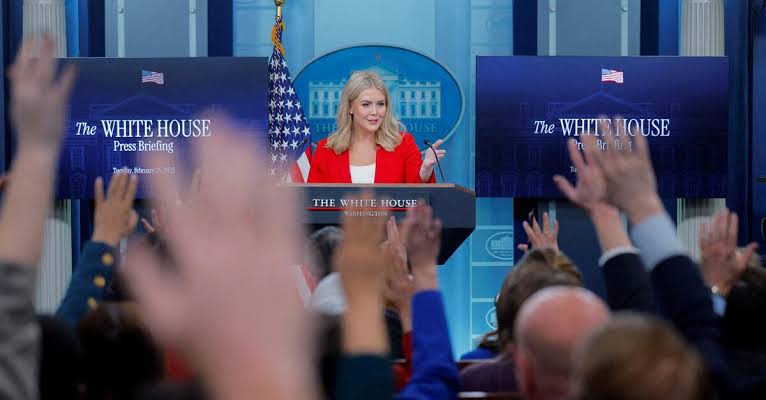
Pool duty is sometimes difficult and frequently takes a long time. The White House announces the end of coverage opportunities (a lid) and instructs pool members on what time to arrive at the White House in the morning (the call time). In the interim, people frequently wait in a motorcade van, the White House briefing room, or the corridors of an international meeting.
Pool members are always expected to be prepared to start communicating information to their colleagues at any time because events frequently come up out of the blue.
Additionally, they need to stay vigilant since they know that the information they offer will be utilized in global news broadcasts.
Who covers the cost of the pool?
When major news organizations go in government-provided vehicles, stay in hotels, or fly on Air Force One, they cover their own expenses. The White House's calculations are used to calculate the expenses, which are then billed to news outlets.
The expense of presidential coverage is high, and depending on the venue, multiday travel might cost the outlets in the pool tens of thousands of dollars.
The establishment of the pool also entails additional expenses, such as overtime compensation, equipment expenditures, and the cost of sending footage over satellites or high-speed internet.
The price tag is dispersed because outlets alternate who is in the pool and, consequently, accountable for the expenses. Although fewer go on Air Force One, where the daily fees are higher, dozens of outlets take part in the print pool rotation.
Every five days, each network in the five-network television pool bears the cost of pooling. Theoretically, removing a network from the pool rotation would give the other four networks 20% additional pool days, which would raise their personnel and coverage expenses.
.png)
.jpg)