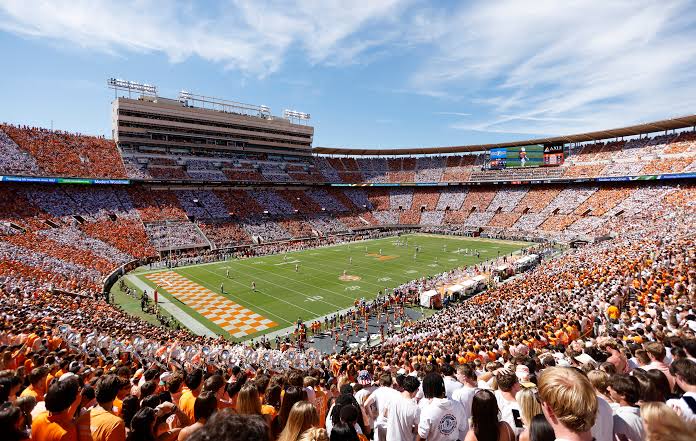
A significant plan to reform college athletics was approved by the Senate on Monday by a sizable bipartisan majority of 77-22.
The House is currently on recess until after the November midterm elections, so it is unclear if it will support the Senate plan. Notably, the legislation has been opposed by the Congressional Black Caucus.
The "Protect College Sports Act" would establish national guidelines for how college athletes can make money off of their name, likeness, and image.
The bill's primary backer, Senator Ted Cruz, who chairs the Senate Commerce Committee, has criticized the "chaos" in the "wild west" of collegiate sports contracts and contended that Congress must take action.
He stated at a news conference last week, "The Protect College Sports Act is bipartisan legislation designed to bring order to the chaos, designed to put simple, common sense rules in place to ensure that college sports remain strong and vibrant for decades to come."
The NCAA and major conferences have approved the bill. The National College Players Association, the NAACP, and the AFL-CIO, on the other hand, are against the bill, claiming that it adequately safeguards the rights of student athletes while protecting the interests of colleges and the NCAA.
The bill's chief Democratic co-sponsor, Sen. Maria Cantwell, claimed that rather than forcing universities to pay exorbitant sums for their sports teams, the law will encourage them to invest in education and research.
"This is about reining in the bad practices that are happening in college sports today, the runaway costs that are sending people to the state legislature asking for bailout from taxpayers to pay for sports, asking people to take endowment funds that really should go to things like research or AI, but have to be spent because of the runaway arms race in sports spending," she stated.
In a news release, the White House stated that President Donald Trump "believes wholeheartedly that college sports are worth fighting for — for the athletes, the schools, the fans, and America" and urged Congress to deliver the bill to his desk.
In a post on Truth Social, Trump lauded the Senate's approval, describing it as "a really big deal." "It will save the colleges themselves, not just college athletics."
It sets a five-year eligibility criterion, restricts players to a single transfer, and gives the NCAA the power to control player remuneration. Additionally, it keeps conferences from expanding beyond 19 teams while enabling them to collectively negotiate future TV deals. For instance, there are eighteen teams in the Big Ten.
Opponents of the law contend that the anti-trust exclusions run the risk of granting the NCAA and the institutions excessive authority.
Sen. Chris Murphy, a Democrat, stated in a joint statement with labor organizations that "this bill does, at its core, protect a system of exploitation." "This bill suppresses compensation for some of the most valuable athletes in the world, protecting the billions of dollars that executives and coaches make."
The law was criticized by Stanford University football player Sen. Cory Booker, who claimed it was "for the large, wealthy interests that have been controlling college sports for a long time."
Additionally, the National College Players Association said that the package would prevent athletes from successfully suing their schools in cases of sexual abuse, fatal injuries, or catastrophic injuries due to what it refers to as a "loophole" that permits the schools to "cure" a violation within 30 days.
Cruz refuted the claim that the bill will reduce elite student athletes' earning potential and negotiating strength. It protects student athletes, which is the exact opposite of what it accomplishes. First, it safeguards their legal right to share in school earnings, but second, it preserves their right to be compensated for their true name, image, and likeness.
The senator from Texas underlined that the plan considers "the 99% of student athletes who will never play in the NBA, will never play in the NFL" in addition to the "superstars" in collegiate athletics.
He went on, "Sports currently gives them a ticket to college, and the skills they learn—hard work, discipline, excellence, teamwork, sportsmanship—those skills set them up for success." And hundreds of thousands of these jobs will disappear if we do nothing. For student athletes, that would be disastrous.